
Industry News • 5 Mar, 2026 • 3 min read
Middle East Conflict Disrupts Global Air Cargo and Supply Chains
By Andrea Davila
As geopolitical tensions escalate in the Middle East, the global logistics industry is experiencing significant disruption across air cargo networks. Recent military activity involving the United States, Israel, and Iran has forced the closure or restriction of major airspace corridors, impacting critical logistics hubs and reducing global transport capacity.
Major Reduction in Global Air Cargo Capacity
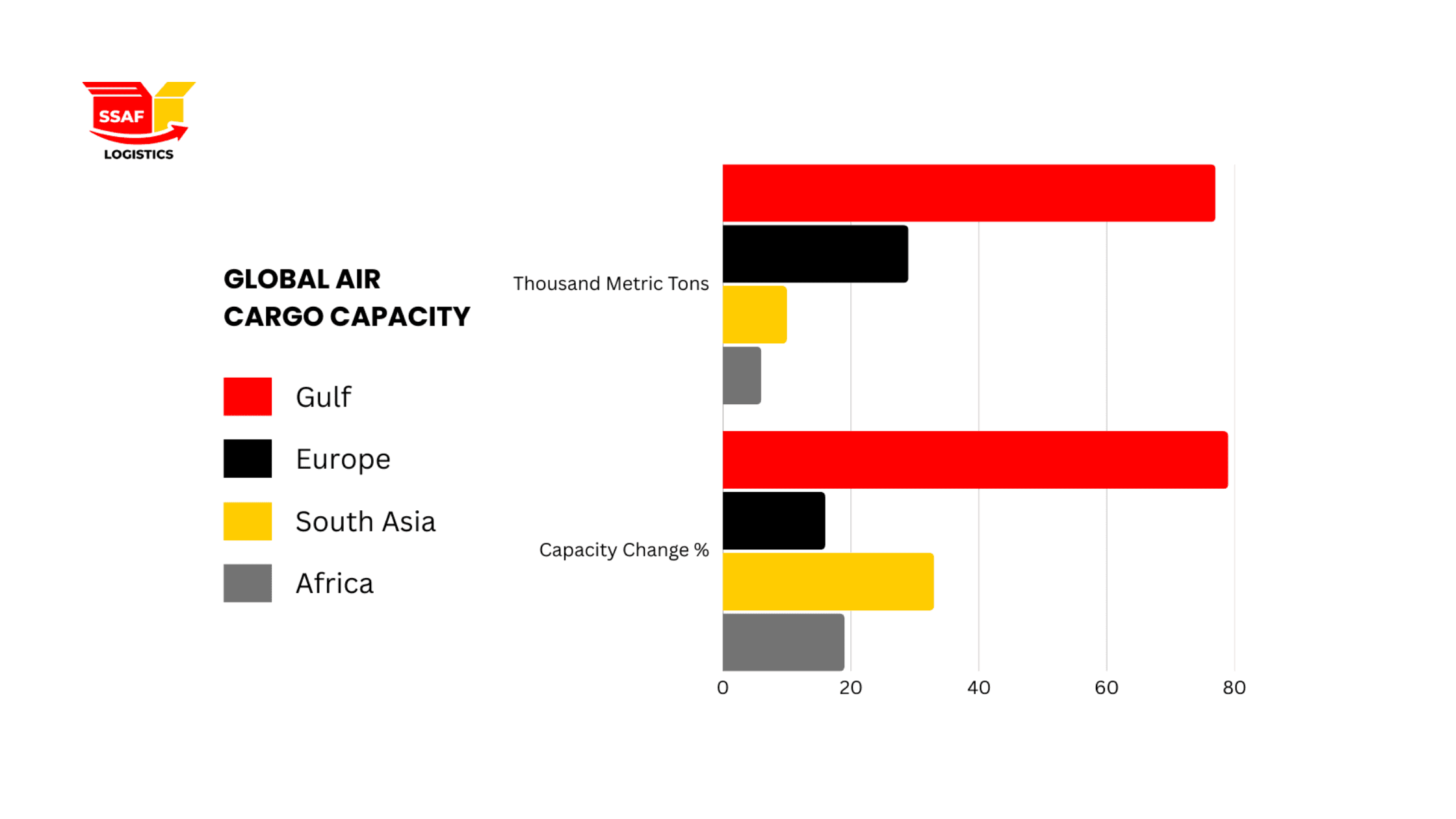
One of the most immediate effects of the conflict has been a sharp drop in available cargo capacity. According to aviation analytics data, global air cargo capacity fell 22% between February 28 and March 3 as passenger and freighter aircraft were grounded across the region. Key international cargo hubs such as Doha and Dubai have been heavily impacted by these operational disruptions.
Air cargo plays a vital role in global trade, moving roughly one-third of the world’s trade by value, including high-value and time-sensitive shipments such as electronics, pharmaceuticals, aerospace components, and perishable goods.
Key Trade Lanes Experiencing Significant Declines
The corridor connecting Asia, the Middle East, and Europe has been particularly affected. Cargo capacity on this route has declined 39% since the start of the conflict, creating bottlenecks across several international supply chains.
At the same time, some airlines have attempted to reroute shipments. Direct air cargo capacity between China and Europe has increased by approximately 26%, partially offsetting disruptions but still leaving a significant gap in global freight availability.
Middle Eastern airlines normally account for around 13% of global air cargo capacity, meaning disruptions in the region can have an outsized impact on global freight flows.
Rising Freight Rates Across Key Routes
As capacity tightens, freight rates are beginning to rise. According to the Freightos Air Index:
- Rates from Southeast Asia to Europe increased more than 6%, reaching approximately $3.82 per kilogram
- Rates from South Asia to Europe increased around 3%
- Rates from South Asia to the United States increased about 5%
If disruptions persist, logistics analysts expect continued pressure on spot market air freight pricing.
Aerospace and Manufacturing Supply Chains at Risk
The aviation sector is also experiencing strain due to delayed shipments of critical aircraft parts. In 2025 alone, 6.7% of global aerospace air shipments moved to or from the Middle East. When parts cannot reach maintenance facilities or airlines on time, aircraft may remain grounded longer, creating a cascading effect across airline operations and maintenance schedules.
These disruptions also affect just-in-time manufacturing systems, particularly for industries dependent on high-value components and rapid replenishment cycles.
Related Blog Posts
![[object Object]](/_next/image?url=https%3A%2F%2Fcdn.sanity.io%2Fimages%2Fj6rggeis%2Fproduction%2F7ad625a0410e359fd61ef0773f77e1800b510c03-2240x1260.png&w=3840&q=75)
![[object Object]](/_next/image?url=https%3A%2F%2Fcdn.sanity.io%2Fimages%2Fj6rggeis%2Fproduction%2F2f1f139cc766e1ade60d1668908d10f6406721ff-2240x1260.png&w=3840&q=75)
![[object Object]](/_next/image?url=https%3A%2F%2Fcdn.sanity.io%2Fimages%2Fj6rggeis%2Fproduction%2F4d41da7b56424c35af0d33fe2194588ac02959a3-2240x1260.png&w=3840&q=75)
![[object Object]](/_next/image?url=https%3A%2F%2Fcdn.sanity.io%2Fimages%2Fj6rggeis%2Fproduction%2F66a515608ad34ea382b2934ebe15810e650d41b6-2240x1260.png&w=3840&q=75)