
Industry News • 15 May, 2026 • 3 min read
Freight Friday News: Showing Early Signs of Rising Diesel Costs
By Andrea Davila
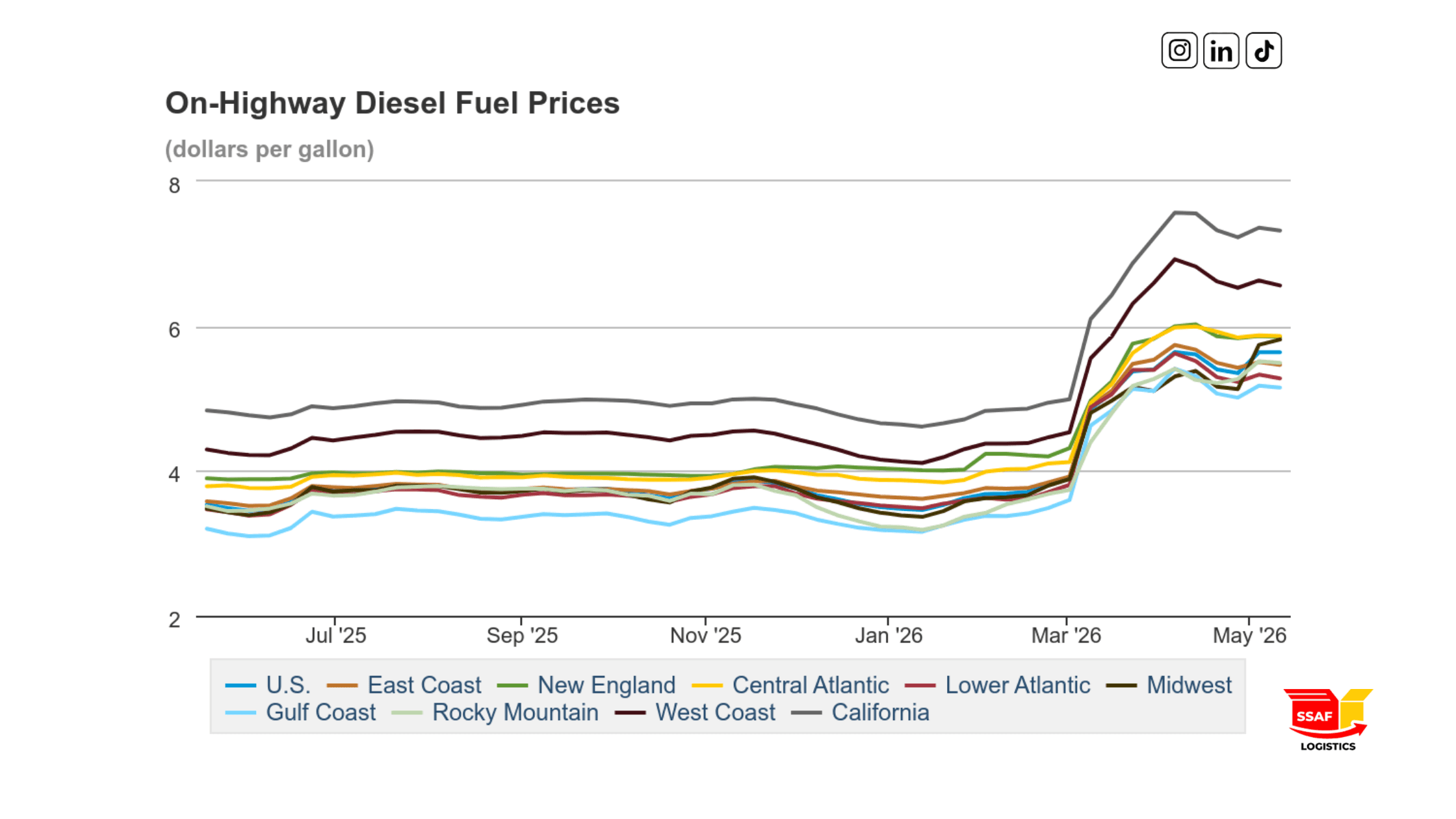
Diesel Prices Are Showing Early Signs of Shifting Higher
After several weeks of declines, benchmark diesel prices are beginning to stabilize while futures markets trend upward again. Although the latest national diesel average only moved slightly, underlying market indicators suggest transportation costs may be preparing for another upward cycle.
For shippers, carriers, and supply chain managers, even small fuel market changes matter. Diesel pricing directly impacts freight rates, fuel surcharges, drayage operations, and over-the-road transportation costs across the supply chain.
Why Futures Markets Matter
Retail diesel prices often lag behind futures trading activity. While pump prices may appear relatively stable today, rising ULSD (ultra-low sulfur diesel) futures can signal higher transportation costs in the coming weeks. According to recent market activity, diesel futures have started moving upward faster than crude benchmarks, indicating tightening market conditions.
This matters because freight carriers typically adjust fuel surcharges based on benchmark diesel pricing. When futures climb, operating costs can rise shortly after across trucking and intermodal transportation networks.
The Impact on Freight Operations
Rising diesel costs affect more than just line haul transportation. They influence:
- Regional trucking rates
- Port drayage pricing
- Warehousing distribution costs
- Inland transportation budgets
- Transloading efficiency and scheduling
For companies operating across manufacturing, industrial, energy, and construction sectors, fuel volatility can create unexpected pressure on logistics budgets and delivery timelines.
Businesses moving freight through major gateways like Port Houston may especially feel these shifts as transportation demand and inland freight movement remain strong throughout Texas.
Staying Flexible in a Changing Market
Fuel markets remain sensitive to refinery output, global oil demand, geopolitical uncertainty, and seasonal freight activity. Even modest benchmark increases can compound over time if futures markets continue climbing.
That’s why flexible logistics planning is becoming increasingly important. Strategies like transloading, optimized routing, consolidated shipments, and efficient warehouse positioning can help reduce unnecessary fuel exposure and keep freight moving efficiently.
As fuel markets continue evolving, proactive freight planning will remain critical for controlling transportation costs and maintaining operational reliability.
Related Blog Posts
![[object Object]](/_next/image?url=https%3A%2F%2Fcdn.sanity.io%2Fimages%2Fj6rggeis%2Fproduction%2Fb3480cb82a8dbec162e8cb7bae51ad8e8b6fa2e7-2240x1260.jpg&w=3840&q=75)
![[object Object]](/_next/image?url=https%3A%2F%2Fcdn.sanity.io%2Fimages%2Fj6rggeis%2Fproduction%2F2f1f139cc766e1ade60d1668908d10f6406721ff-2240x1260.png&w=3840&q=75)
![[object Object]](/_next/image?url=https%3A%2F%2Fcdn.sanity.io%2Fimages%2Fj6rggeis%2Fproduction%2F4d41da7b56424c35af0d33fe2194588ac02959a3-2240x1260.png&w=3840&q=75)
![[object Object]](/_next/image?url=https%3A%2F%2Fcdn.sanity.io%2Fimages%2Fj6rggeis%2Fproduction%2F66a515608ad34ea382b2934ebe15810e650d41b6-2240x1260.png&w=3840&q=75)