
Industry News • 1 May, 2026 • 3 min read
Freight Friday News: Logistics Companies Forced to Adapt to Modern Cargo Theft
By Andrea Davila
What was once opportunistic theft has turned into a coordinated, technology-driven operation run by organized networks. And while the scale and sophistication of these crimes continue to grow, the response from federal enforcement is finally taking some action.
That gap is forcing the logistics industry to take matters into its own hands.
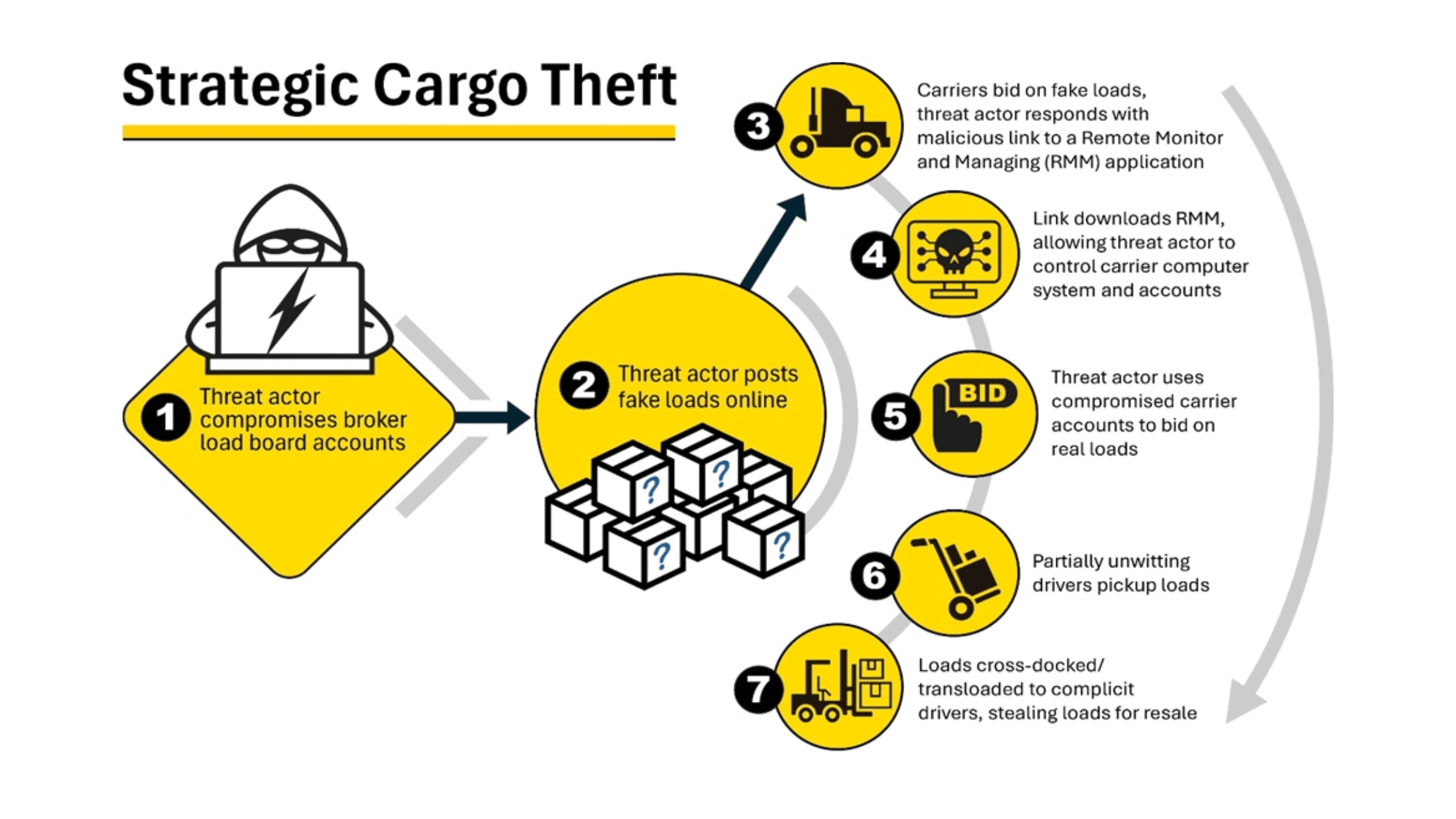
Today’s cargo theft isn’t about cutting a trailer seal and disappearing. Criminal groups are leveraging digital tools, impersonation tactics, and detailed operational knowledge to infiltrate supply chains. From cloned carrier identities to fraudulent load pickups, these schemes are designed to look legitimate until it’s too late.
Losses have surged into the hundreds of millions annually, with some estimates suggesting the real cost is far higher due to underreporting.
Federal Response
Despite the scale of the issue, cargo theft often sits in a gray area of enforcement. It crosses state lines, involves digital fraud, and ties into larger organized crime networks yet there’s no fully coordinated federal framework to address it despite recent FBI alerts regarding a surge in cyber-related cargo crimes.
That leaves agencies like the FBI reacting after the fact rather than proactively disrupting these networks. Meanwhile, state and local authorities often lack the jurisdiction or resources to tackle multi-state or international operations effectively.
The Industry Is Adapting Quickly
Unlike regulators, logistics providers don’t have the luxury of waiting. Carriers, brokers, and shippers are actively upgrading how they manage risk:
- Tightening carrier vetting and identity verification
- Using real-time tracking and geofencing
- Monitoring load activity for anomalies
- Investing in secure yards and controlled access points
In many cases, companies are building their own intelligence networks sharing insights, tracking fraud patterns, and flagging suspicious activity before it turns into a loss.
This shift marks a major change: security is no longer reactive; it’s operational.
From Cost of Doing Business to Strategic Priority
For years, cargo theft was treated as an unavoidable expense. That mindset is changing. With higher-value shipments, tighter margins, and more complex supply chains, a single theft can disrupt entire operations.
And the ripple effects go far beyond logistics; impacting inventory, production timelines, and ultimately end consumers.
The current enforcement gap underscores a critical reality: the private sector is its own best defense. Resilience now hinges on a company's ability to adapt, specifically through strategic investments in supply chain visibility and proactive fraud prevention.
Cargo theft isn’t slowing down.
Related Blog Posts
![[object Object]](/_next/image?url=https%3A%2F%2Fcdn.sanity.io%2Fimages%2Fj6rggeis%2Fproduction%2Fb3480cb82a8dbec162e8cb7bae51ad8e8b6fa2e7-2240x1260.jpg&w=3840&q=75)
![[object Object]](/_next/image?url=https%3A%2F%2Fcdn.sanity.io%2Fimages%2Fj6rggeis%2Fproduction%2F7ad625a0410e359fd61ef0773f77e1800b510c03-2240x1260.png&w=3840&q=75)
![[object Object]](/_next/image?url=https%3A%2F%2Fcdn.sanity.io%2Fimages%2Fj6rggeis%2Fproduction%2F2f1f139cc766e1ade60d1668908d10f6406721ff-2240x1260.png&w=3840&q=75)
![[object Object]](/_next/image?url=https%3A%2F%2Fcdn.sanity.io%2Fimages%2Fj6rggeis%2Fproduction%2F66a515608ad34ea382b2934ebe15810e650d41b6-2240x1260.png&w=3840&q=75)