Industry News • 29 Oct, 2026 • 10 min read
Houston’s Construction Boom: Growth, Major Projects, and What It Means for the Industry
By Andrea Davila
Houston continues to rank among the country’s leading construction markets. With a growing population, major infrastructure investments, and increasing demand for commercial and industrial development, the city is creating new opportunities for contractors, developers, suppliers, and logistics providers.
However, this growth also brings challenges. Skilled labor shortages, rising construction costs, and equipment delivery schedules are putting pressure on projects across the region.
Here is a closer look at the numbers behind Houston’s construction boom and what they mean for the industry in 2026.
Houston’s Population Growth Is Driving Construction Demand
Houston’s rapid population growth is one of the biggest factors supporting construction activity.
According to the U.S. Census Bureau, the Houston metropolitan area added 126,720 residents between July 2024 and July 2025, bringing its population to approximately 7.9 million. Houston ranked first among U.S. metropolitan areas for numeric population growth during that period.
More residents mean greater demand for housing, schools, healthcare facilities, roads, commercial buildings, and public infrastructure.
As the region expands, developers and contractors must keep pace with the need for new facilities and improvements to existing infrastructure.
Construction Activity Is Expected to Grow in 2026
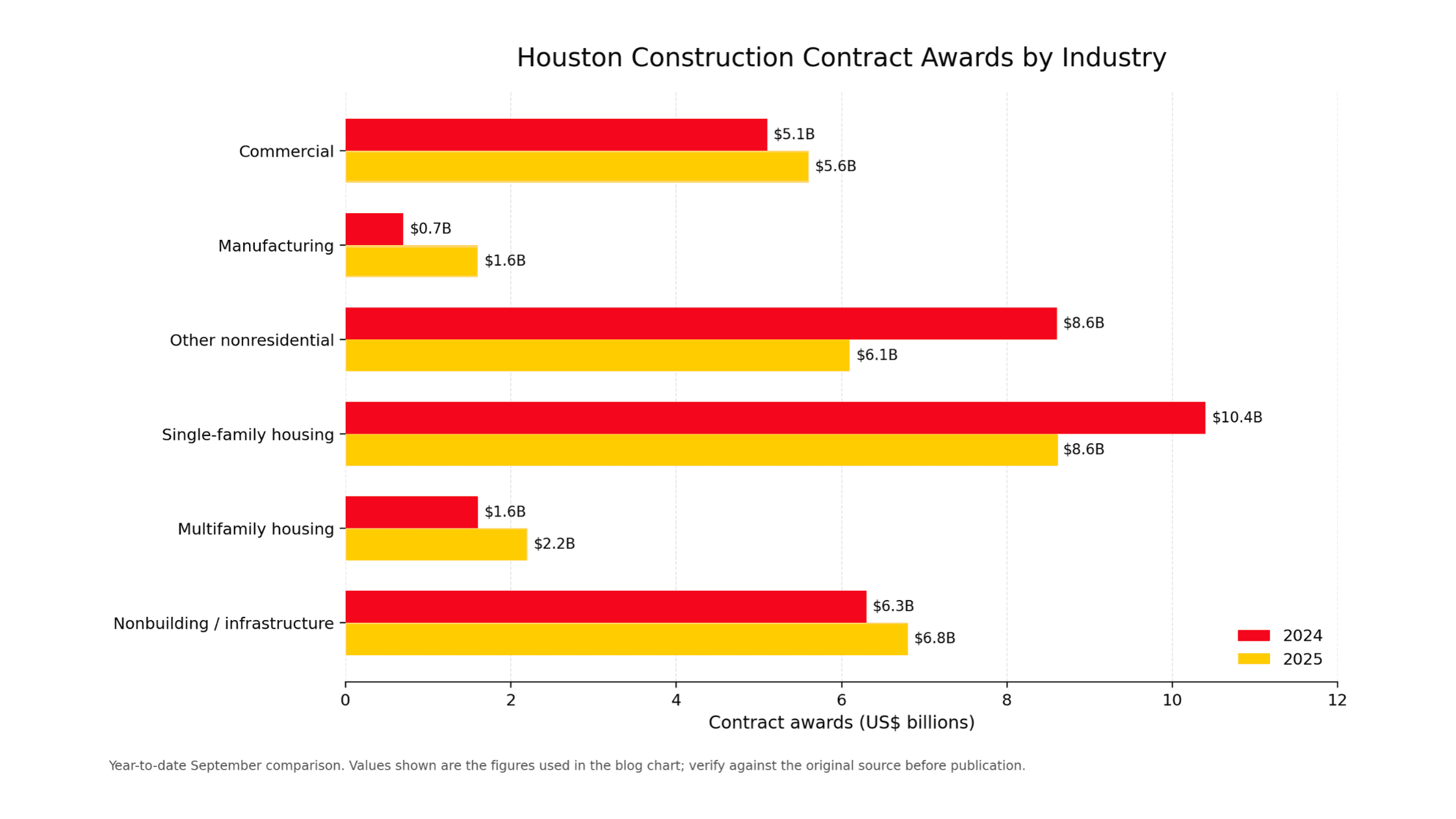
Houston’s construction market continues to benefit from investment across several industries.
Construction starts are forecast to increase by 6% in 2026, with nonresidential construction projected to grow by 11.7%, according to the market outlook figures reported by the Greater Houston Partnership’s construction activity resources.
Several sectors are contributing to this demand:
- Data centers: Growing demand for digital infrastructure is driving investment in facilities that require substantial electrical systems, cooling equipment, and specialized construction.
- Healthcare: Population growth is increasing the need for hospitals, medical facilities, and related infrastructure.
- Education: K–12 schools and higher education institutions require new facilities and upgrades to accommodate growing communities.
- Commercial and industrial development: Businesses need additional space, warehouses, distribution facilities, and specialized buildings to support operations.
These projects often require specialized equipment, construction materials, electrical components, and other supplies to arrive on schedule.
Major Infrastructure Projects Are Moving Forward
Houston’s growth is also reflected in large-scale infrastructure investments.
Two notable projects include:
- Grand Parkway / SH 99 Segment B-1 — $1.47 billion: This major highway project supports regional transportation and connectivity as communities and businesses expand.
- George R. Brown Convention Center transformation — $2 billion: The planned transformation represents a significant investment in Houston’s convention facilities and downtown development.
Projects of this size require coordination among contractors, suppliers, equipment providers, and transportation partners. Delivering materials and machinery to the right location at the right time is an important part of keeping work on schedule.
Houston Leads the Country in Construction Job Growth
The expansion of construction activity is also creating demand for workers.
According to Capital Analytics Associates, reporting on an Associated General Contractors of America analysis of federal employment data, Houston added 13,100 construction jobs between July 2025 and July 2026. This was the largest increase among U.S. metropolitan areas during that period, with construction employment growing by approximately 5%.
Despite these gains, finding experienced workers remains a challenge.
Contractors are competing for skilled professionals, particularly electricians, concrete workers, HVAC technicians, and other specialized trades. Data center, power, healthcare, and industrial projects are adding to that competition.
When labor is limited, projects may face longer schedules, increased labor costs, and difficulty coordinating multiple trades.
For contractors, securing the right workforce is only part of the challenge. They must also ensure that materials, machinery, and equipment are available when crews are ready to work.
Rising Construction Costs Put Pressure on Budgets
Houston’s construction boom comes with higher project costs.
According to Anchor Construction’s October 2026 market analysis, commercial construction costs in Houston generally range from $240 to $380 per square foot, depending on the type of project. The company also reports annual cost escalation of approximately 3% to 6%.
These figures are indicative estimates rather than universal prices. Actual costs depend on project scope, building type, site conditions, and other requirements.
Several factors are contributing to cost pressures:
- Skilled labor shortages: Competition for experienced workers can increase wages and subcontractor costs.
- Site preparation and utilities: Soil conditions, drainage requirements, and utility extensions can add unexpected expenses.
- Equipment lead times: Delays in obtaining specialized or long-lead equipment can affect construction schedules.
- Transportation and coordination: Late deliveries can disrupt installation schedules and create additional project costs.
Anchor Construction also notes that complex site conditions can add 10% to 15% or more to baseline construction estimates.
For project owners and contractors, careful budgeting and scheduling are essential. Planning for equipment transportation, receiving, storage, and delivery early can help reduce avoidable disruptions.
Why Logistics Matters to Houston’s Construction Industry
As Houston’s construction market expands, dependable logistics becomes increasingly important.
Heavy machinery, industrial equipment, electrical components, building materials, and other project supplies must move efficiently between manufacturers, warehouses, ports, and job sites.
A delay in one delivery can affect multiple stages of a project, especially when specialized equipment is needed before installation can begin.
Planning for logistics early can help contractors and project managers:
- Coordinate equipment and material deliveries with construction schedules.
- Arrange temporary storage when shipments arrive before a job site is ready.
- Consolidate shipments from multiple suppliers when practical.
- Coordinate domestic transportation and international freight movements.
- Improve visibility and communication throughout the shipping process.
For projects involving imported equipment or international suppliers, freight forwarding and warehousing can be especially useful. Having a receiving location and coordinating shipments before they reach the job site can help teams manage timing and cargo handling more effectively.
Supporting Houston’s Growing Project Cargo Needs
At SSAF Logistics, we understand that industrial and construction-related shipments often require more than standard freight transportation. Equipment and project cargo may need coordinated receiving, storage, freight forwarding, and transportation arrangements to reach their destinations.
Our services include air, ocean, and land freight forwarding, project cargo coordination, warehousing and storage, cargo consolidation, and customs clearance.
For contractors, suppliers, and businesses moving equipment through Houston, planning these requirements in advance can help simplify the shipping process and support project schedules.
Whether cargo is moving locally or internationally, reliable coordination helps keep materials moving toward their intended destination.
Looking Ahead: Houston’s Construction Market in 2026
Houston’s population growth, infrastructure investment, and expanding industrial activity continue to create opportunities for the construction industry.
The numbers tell a clear story: the metropolitan area added more than 126,000 residents in one year, construction employment recorded the nation’s largest metropolitan increase in the latest reported period, and commercial construction costs remain elevated.
The challenge is turning that demand into completed projects while managing labor availability, budgets, equipment lead times, and delivery schedules.
As Houston continues to grow, contractors and project owners who plan ahead and coordinate their resources effectively will be better positioned to navigate the demands of the market.
Planning a construction or industrial equipment shipment? SSAF Logistics can help coordinate your freight forwarding, project cargo, warehousing, and shipping needs.
Visit SSAF Logistics to learn more, or request a quote.
Related Blog Posts